About
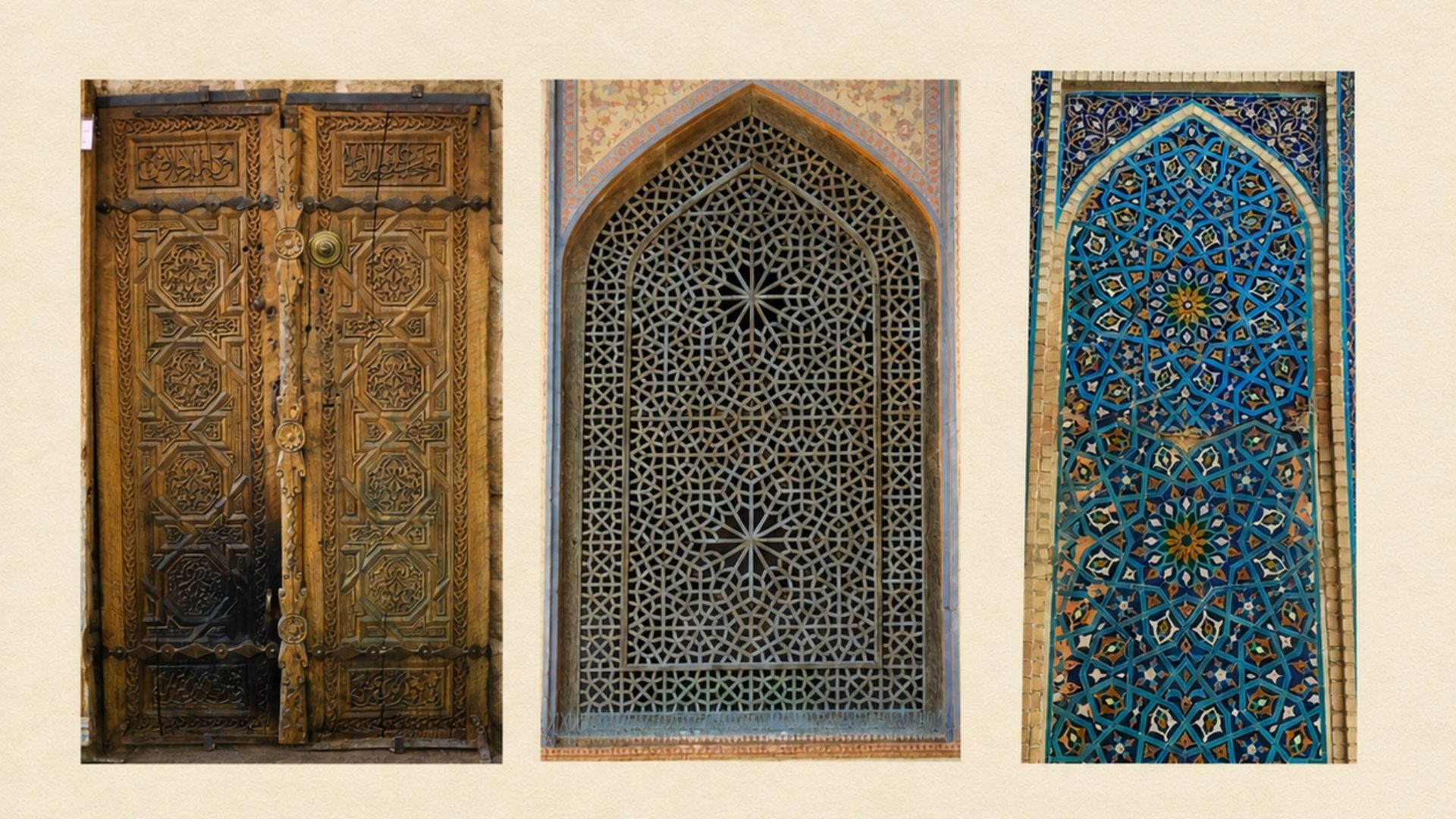
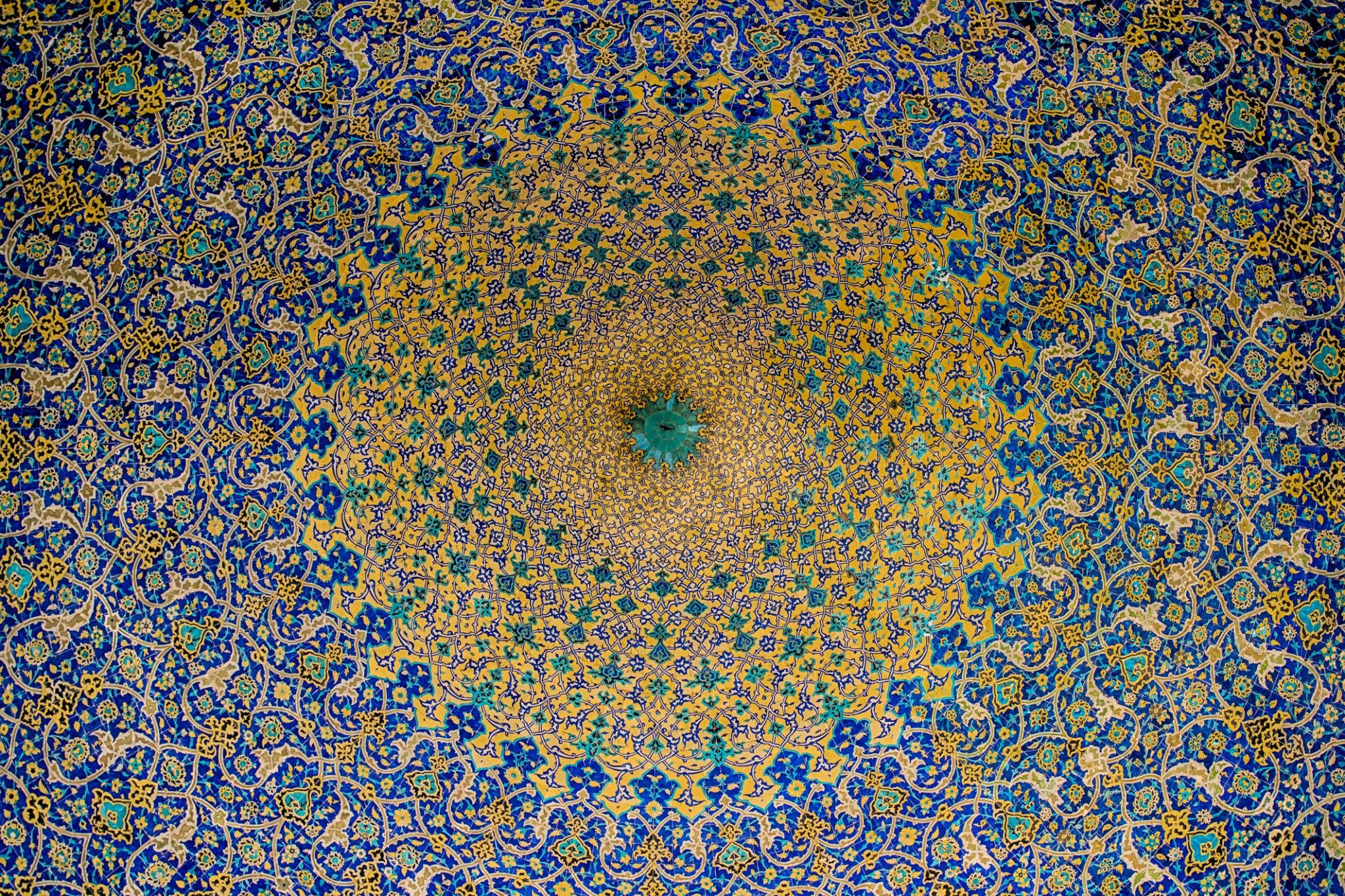
This year’s Geometry Summer School brings the legacy of the Silk Road through time and space to the present moment. Over many centuries, the Silk Road brought diverse peoples into contact, fostering intellectual and creative exchange. Historical evidence of this widespread creative alchemy survives in a few precious manuscripts and scrolls, providing a glimpse into the knowledge and wisdom shared among artisans, mathematicians, and scientists. Even more impactful are the region’s architectural masterpieces, monuments to ingenuity and skill.
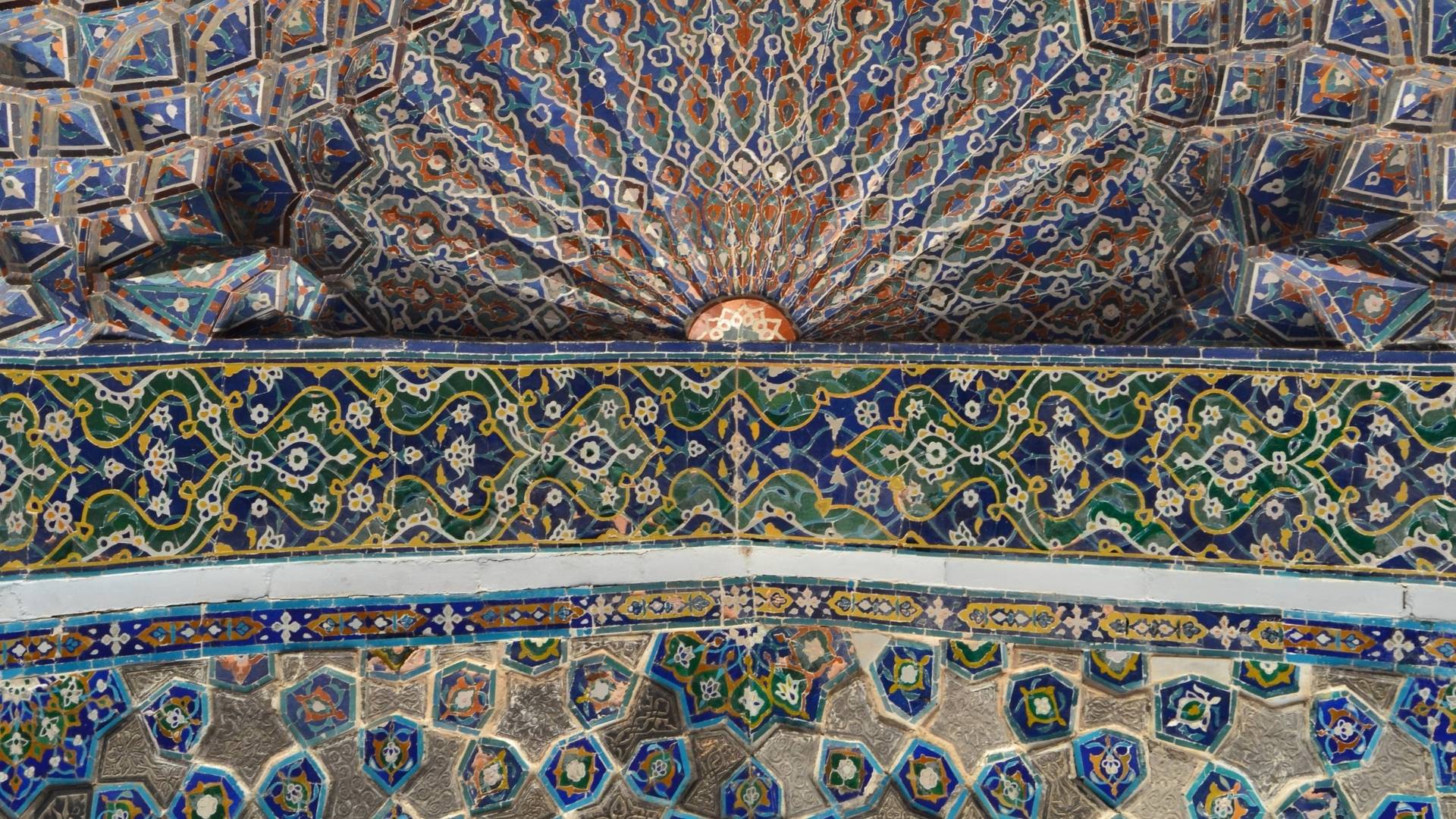
Join us online for a week engaging with this rich heritage. Discover the unique innovations that the masters of the past introduced into the pattern language. Uzbekistan’s magnificent monuments will be at the heart of the week, with sessions investigating architectural and ornamental case studies from Samarkand, Bukhara, and Khiva. We will also engage with the wider geometric conversations among peoples and cultures in the region, including examples from the Tatars and the Mughals.
We are pleased to welcome presenters from around the globe to lead participants in practical geometry sessions, hand drawing and composition activities, and illustrated presentations on monuments and patterns. We will also continue our annual Summer School tradition of sharing a “challenge pattern” and discovering together what lies hidden within its shapes and lines
Session Descriptions
Introduction to Central Asia: A Crossroads of Craft, Geometry and Architecture
Safoura Zahedi
This opening lecture introduces the architectural landscape of historic Central Asia, with a focus on the cities of Khiva, Bukhara, and Samarkand in present-day Uzbekistan. Tracing centuries of cultural exchange along interconnected historic trade routes, we will overview the movement of craft traditions, geometric arts, and architectural forms between Central Asia, Iran, India, and beyond. Providing a rich visual regional and historical overview, this session establishes the context for a deeper engagement with the monuments, decorative arts, and geometric designs explored throughout this year’s Geometry Summer School.
Following the First Rosette 500 Years Down the Silk Road: Mazar Arab Ata to Ishrat Khana to Masjed-e Kabud
Alan Adams
The first surviving example of that which we call the Islamic geometric rosette appears in 367 AH, 977/8 CE in a dusty town between Samarkand and Bukhara. Tim, Uzbekistan, perhaps a surprising place for an innovation which will bear incredible fruit. This new rosette form is related closely to more ancient geometric patterns, but it is also new and distinct. Although this new pattern can be drawn on an isometric grid, in this session, we will look more deeply at its structure, explore how to draw it without a huge triangle grid, and look at its development over 500 years as it travels down the Silk Road.
Arch as a Threshold: principles and constructions of common Timurid pointed-arch profiles
Dr Katya Nosyreva
Pointed arches with elegant, soaring proportions and monumental entrance portals (iwans) framed by towering façades are among the most distinctive features of Timurid architecture and have shaped its visual identity for centuries. These forms remain especially prominent in the surviving and restored monuments of Uzbekistan. Although scholars have extensively studied the geometry of arches, vaults, and domes, the historical methods used to design and construct them remain unclear.
In this session, we will draw on the limited historical records and surviving architectural restoration drawings to explore how three- and four-centered arches were designed using circular arcs of different radii. We will also introduce the lesser-known use of elliptical curves in the design of pointed arches. Along the way, we will consider what these construction methods reveal about the relationship between architecture and medieval Islamic mathematics, as well as the structural and aesthetic decisions made by Timurid architects.
Tatar ornamental heritage: patterns of Oluğ Olıs (aka “Golden Horde”) Part 1
Rajen Astho
Tatars, along with some other indigenous ethnicities of modern Russia, were once part of the global medieval Islamic civilization, drawing from and contributing to its artistic and intellectual pool. Surviving fragments reveal that the monuments of the Oluğ Olıs (the so called “Golden Horde”) were once adorned with patterns typical to the Central Asian repertoire rendered in ceramic cut tiles. Tatar ornamental heritage is also represented by ancient motifs found all over the Great Steppe; these in turn, may have influenced the Central Asian ornamental language.
In two sessions, Rajen Astho will lead participants through the construction of a few Oluğ Olıs patterns, from simple compass-work medallions to refined rosette arrangements. Examples from the Tatar heritage will illuminate investigations of the principles of the Islamic geometric rosette.
An Enigmatic Pattern from the Topkapi Scroll
Ameet Hindocha
In this session we will explore an intriguing pattern from the Topkapi Scroll which uses a vocabulary of shapes found in many patterns across historic sites in Central Asia and India. This pattern does not give up its secrets easily, but over years of revisiting it, Ameet has found a simple construction which reveals the insightful proportioning embedded within it. We will construct the pattern as it appears in the scroll, then hiding within it, we will uncover a second, related pattern from Humayan’s Tomb in Delhi.
Tatar ornamental heritage: patterns of Oluğ Olıs (aka “Golden Horde”) Part 2
Rajen Astho
Tatars, along with some other indigenous ethnicities of modern Russia, were once part of the global medieval Islamic civilization, drawing from and contributing to its artistic and intellectual pool. Surviving fragments reveal that the monuments of the Oluğ Olıs (the so called “Golden Horde”) were once adorned with patterns typical to the Central Asian repertoire rendered in ceramic cut tiles. Tatar ornamental heritage is also represented by ancient motifs found all over the Great Steppe; these in turn, may have influenced the Central Asian ornamental language.
In two sessions, Rajen Astho will lead participants through the construction of a few Oluğ Olıs patterns, from simple compass-work medallions to refined rosette arrangements. Examples from the Tatar heritage will illuminate investigations of the principles of the Islamic geometric rosette.
From Samarkand to Sikandra
Jyotika Purwar
Tracing a journey from the Timurid cities of Samarkand and Herat to the imperial landscapes of Agra, this session will examine how ideas of geometry, symmetry, ornament and monumentality travelled across the continent. Using Sikandra as a case study, the session will explore the architectural and cultural connections between Central Asia and India, revealing how Akbar’s mausoleum embodies a remarkable synthesis of inherited traditions and local innovation.
A New Understanding of Constructing a Complex Dual-Level System
Dr Serap Ekizler Sönmez
In this session, Dr Serap Ekizler Sönmez will share her contributions to the field of five-fold dual-level patterns, following a narrative that extends from the kündekâri window wings of the Süleymaniye Mosque to the dual-level patterns of the Topkapı Scroll, a precious record architectural designs in Central Asia.
Where Geometry meets the Natural World
Simon Trethewey
This session will investigate the Golden Section as a beautiful mathematical constant that defines and underpins the natural world. Three flowers found in Uzbekistan guide the exploration of 5-fold geometry and the universal archetypal harmonic geometrical structures found in these flowers will be developed and discussed.
Permutations on a Principle: A complex composition from Sher Dor Madrasa
Marzieh Kaviani
After learning the fundamental principles of masonry patterns, we are ready to think about the patterns more expansively. By understanding the craft behind these patterns and combining them with a gereh structure, we can generate new variations that push the limits of brick-based designs. In this workshop we will explore a broader way of approaching masonry designs with reference to historical examples.
Challenge Pattern
Lisa DeLong, Rajen Astho, Alan Adams, Ameet Hindocha
A Geometry Summer School Tradition: this year’s challenge pattern is a border design from Ulugh Beg Madrasa in Registan, Samarkand. The challenge pattern and some instructions will be shared on Thinkific prior to the start of the Summer School. We encourage everyone to attempt their own analysis of it in advance to continue in the Silk Roads tradition of sharing different approaches and viewpoints in pursuit of beautiful solutions. Our panel of geometers will share their insights into different ways of understanding the pattern.
Extending the principles of the Challenge Pattern: A pattern from Oshtorjan Mosque
Rajen Astho
In this session Rajen Astho will highlight curious connections between the challenge pattern and a sophisticated pattern from Masjid-i Jami-i Oshtorjan. Participants will be guided through the construction of the Oshtorjan pattern, exploring how one design can serve as a foundation for developing more complex variations on a theme.
Timetable
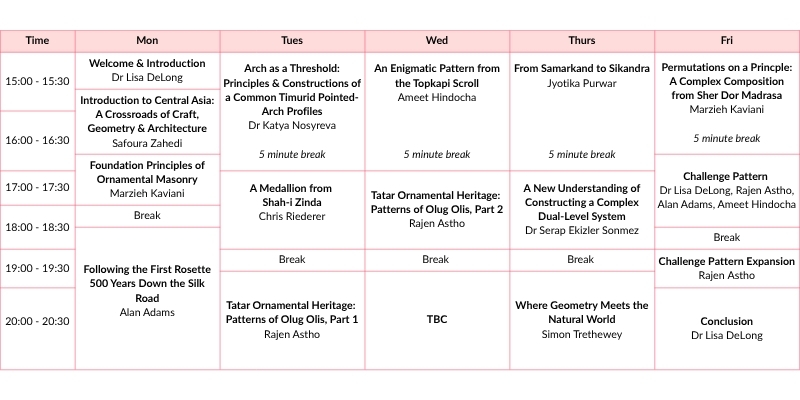
Click for a downloadable version.
Key Information
Who is this course for?
All levels of ability and experience are welcome. You must be aged 18 or over to participate in our programmes.
What dates/times do I attend?
This workshop will run Monday – Friday, 17 – 21 August 2026, 15:00 – 21:00 British Summer Time (GMT+1).
What materials do I need?
You will need to provide your own drafting materials (such as a pencil, compass, and paper). A complete list of required materials will be shared shortly.
Online Learning
How do I attend the online class?
This class will take place on Zoom, an online meeting platform. A link for joining the Zoom meeting will be sent before the start date.
Handouts and recordings of sessions will be made available via Thinkific, our online learning platform, for a period of 3 months after the end of the workshop.
What if I have questions during the workshop?
Students will be able to ask questions via chat or unmuting themselves. Students will also have access to our online learning platform, Thinkific, where we share supplementary content.
I live in a different time zone, can I still attend?
We encourage you to attend the course in real time to really benefit from instruction; however, if you are unable to attend live due to the difference in time you can catch up via recordings on our online learning platform, Thinkific. These recordings are available for a limited time after the course.
Recordings cannot be purchased separately if the course is fully booked or if the course has already started.
Tips:
You must download the Zoom app and create a free account before the class begins, so that you can use the full range of features:
- You can create your free account here
- You can download the Zoom app onto your computer or device here
- You can create your free account here
FAQs
Do you offer concessions?
Yes, we offer concessions for Seniors/60+, full-time students and people who are unemployed/in receipt of benefits.
Concessions cannot be applied in retrospect. To receive a concession, please apply via our online form. We will then send you a discount code to use when booking your space.
What if I need to change or cancel my booking?
No refunds, unless cancelled by the School. If you cancel up to 1 week before the workshop starts, we can offer a transfer to another workshop of equivalent value, subject to availability.
Tutor Biographies
-
Alan Adams
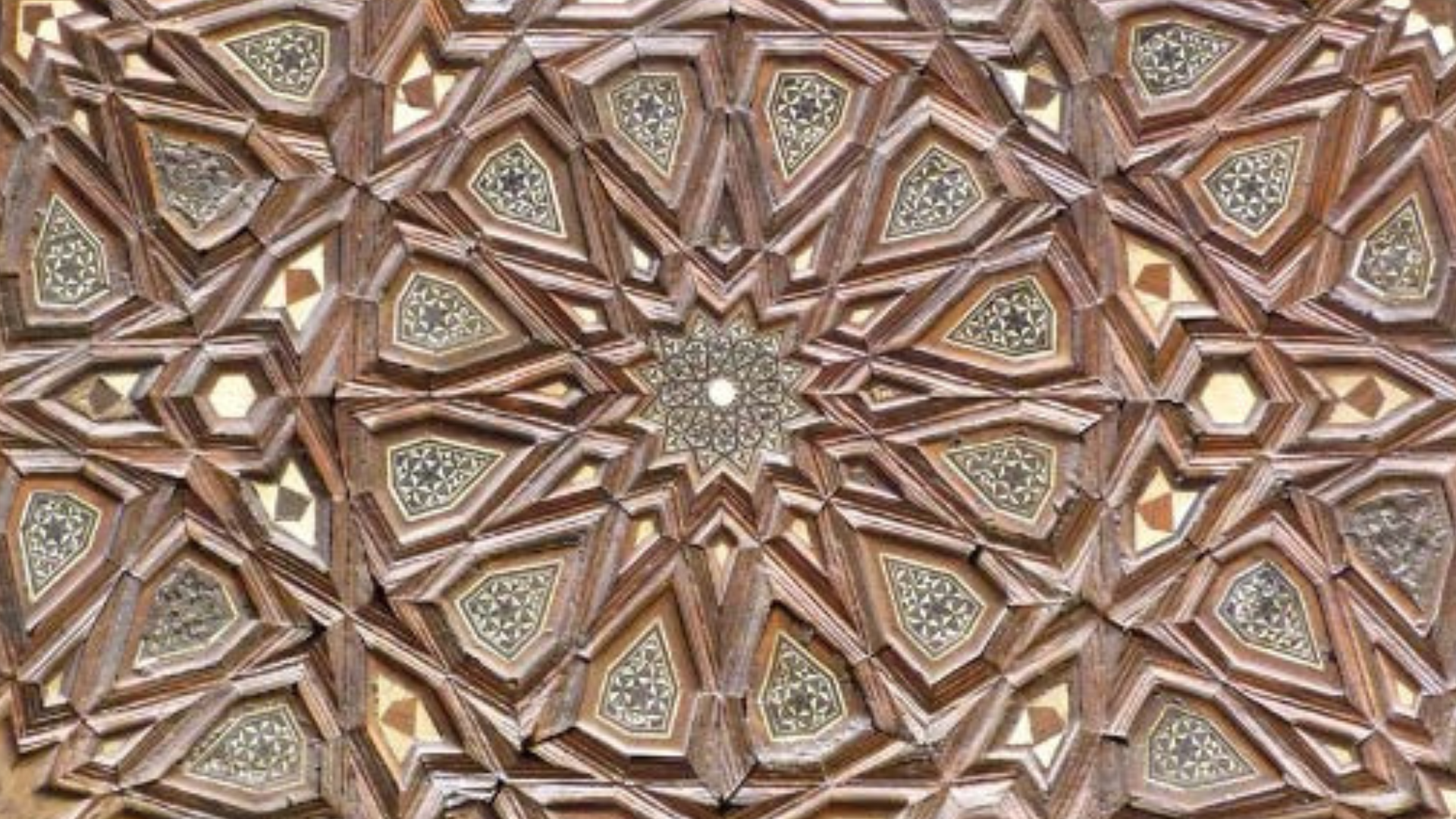
Alan Adams retired in 2008 to pursue a lifelong interest in understanding the structure of Islamic geometric art, particularly the stunning executions in wood of the Mamluks. A grounding in technical drawing from years as a draftsman, before the introduction of CAD, and a career as a scientist served as a foundation for a self-taught path. As an independent learner, he quickly realised there was no solid introductory text to guide newcomers. In response, he created a community Facebook page in February 2014 to share knowledge, questions, and discoveries—both his own and those of the thousands of members who have joined since. Contributions from experts and beginners alike have made it a lively and valuable forum. Members frequently exchange drawing tips, answers to specific technical questions, and discussions of the geometric foundations of Islamic designs. The ideal end of Alan’s journey would be to master the Mamluk art of wooden panel construction in intricate pattern and to describe it in an English language publication.
-
Rajen Astho
Rajen Astho is a Tatar and Belarusian artist and musician. He completed his MA degree in music composition in St. Petersburg, Russia, in 2010. His interest in traditional forms and modes of art practice outside the academic mainstream led him to become fascinated with Islamic geometric patterns in 2007. Over the next few years, this passion developed into systematic research that continues to this day. He has taught online and in-person courses on Islamic geometric patterns in Uzbekistan, Kazakhstan, Spain and Russia for the King’s Foundation School of Traditional Arts, Deen Arts Foundation and Alqueria de Rosales Summer School.
-
Serap Ekizler Sonmez
After obtaining a bachelor’s degree in Chemistry and Fine Arts, followed by a Master’s degree in Islamic Art History and a doctorate in History, Serap primarily focuses her research on Islamic architecture, geometric patterns, and cultural history. She also teaches courses on these subjects and has published books and articles in this field.
-
Ameet Hindocha
Ameet Hindocha is an artist and designer with a long-standing interest in mathematics, nature and pattern and their expression in the visual arts. In recent years this has manifested itself in ongoing research and application of geometric principles to a wide variety of media and processes. He also teaches on the Foundation Art & Design Diploma at Camberwell College of Arts.
-
Marzieh Kaviani
Marzieh Kaviani is an artist who was born and brought up in Shiraz, Iran, in a culture where crafts and traditions are still part of daily life. Since very early childhood she showed interest and talent in art by imitating the crafts that were practiced by her parents and learned many basic techniques before going to school. She pursued science as it seemed to have the answer for her curiosity about how the world works. In 2016 she was awarded a Msc. in Biotechnology. However, creative activities and making crafts never stopped during these years of studying science. About seven years ago she started to practice geometry as a hobby and gradually had the chance to meet other geometers from all around the world via online classes and was recognized as a promising artist to the online community of artists. In 2021 Marzieh became a member of Fars Masters of Handicraft Society and started a small business making ornamented wooden boxes.
In 2023 she moved to London to do an MA in Traditional Arts in the King’s Foundation School of Traditional Arts and graduated with a Distinction in 2025. In her research at the KFSTA she was looking for connections and overlaps of geometric patterns and patterns in the living world and she found similar patterns in pattern formation and cell division.
-
Katya Nosyreva
Katya Nosyreva, PhD, is a ceramicist, visual artist, and geometer. Living with her family on Dartmoor, UK, she works with porcelain clay and the visual and symbolic language of sacred geometry. Katya’s PhD research (School of Traditional Arts, 2013) combined her studio practice with geometry. She designed and made an architectural space for a Sufi centre in Delhi, India. This work explored the practice of traditional craft within contemporary Sufism. During the course of her PhD research, Katya worked with historical manuals and architectural scrolls on practical geometry. These treasures from the medieval Islamic guild-tradition document practical geometric methods and reveal much about historic approaches. In working with these manuals, Dr Nosyreva finds inspiration for the contemporary geometer.
-
Jyotika Purwar
Jyotika Purwar is an interior architect based in Mumbai, India. She holds a Bachelor’s degree in Interior Architecture from CEPT University, Ahmedabad, and an MFA from the School of the Art Institute of Chicago. For the past eight years, she has led her own design practice, working on a wide range of residential and commercial projects.
Her passion for architectural history has taken her across the globe—to Spain, Morocco, Egypt, Turkey, Japan, and beyond—where she has documented and studied buildings of historical and cultural significance. These travels have deepened her fascination with geometry as a universal language of design.
Over the last six years, Jyotika has been engaged in an in-depth exploration of geometric designs in architecture, studying how material, craft, and mathematical precision come together to create meaning and beauty. This journey has gradually led her back to her own heritage in Mughal architecture.
Agra, her hometown, remains a constant source of inspiration. Here, she finds resonance between global influences—particularly from Persia and the Ottoman world—and the distinctive Indian expressions that evolved under the Mughals. Her current work focuses on comprehensively studying, analysing, and tracing these influences, from the planning of monumental sites to the ornamentation and vast pattern systems that define their surfaces.
-
Chris Riederer
Chris Riederer is an artist, painter and woodworker from Denver, USA. He is endlessly fascinated by patterns and explores this interest in a variety of mediums. His daily practice of exploratory and improvisational geometric drawing is the foundation of his creative work.
Chris has been teaching geometric and biomorphic design workshops as part of the School of Traditional Arts’ international outreach programmes. Through this work he has discovered a passion for teaching and has developed his skillset to better guide students toward a beautiful artistic result.
-
Simon Trethewey
Simon Trethewey is the former Director of Studies for the MA program at The King’s Foundation School of Traditional Arts. He studied at the Royal College of Art in the Visual Islamic and Traditional Arts department with Professor Keith Critchlow and Paul Marchant, graduating with Distinction in 1991. Using the universal language of geometry as source and inspiration, Simon worked for many years as a painter in the medium of egg tempera on gesso. He also works in ceramics and stained glass, designing for a contemporary architectural context. He has exhibited internationally, notably with the British Council in New Delhi and Mumbai where he was a Commonwealth Scholar. Simon’s recent research explores the cosmological proportions found in ancient cultures. This geometry’s timeless relevance forms the basis of teaching materials presented as part of the MA programme. In the practice of traditional arts, these same principles are essential components of design.
-
Safoura Zahedi
Born in Japan and raised in Iran and Toronto, Safoura Zahedi is an architect, artist, and educator. She brings a cross-cultural and interdisciplinary approach to the study of geometry and how it can be used as a spiritual design tool to create spatial experiences that encourage curiosity, meditation, and connection. She holds a Master of Architecture from the University of Toronto, where her thesis investigated processes of translating traditionally 2D geometric patterns into contemporary 3D spatial experiences using computational design and digital fabrication techniques. She is a sessional lecturer at the Toronto Metropolitan University and is a frequent guest speaker and critic at various Canadian universities. In 2022-23, Safoura traveled to 17 countries to pursue international field-based research focused on the use of geometric patterns in architecture and handcrafts across major historic Islamic dynasties. 365 Days of Geometry is an Instagram project devoted to chronicling her encounters and experimentation with objects and architecture and reflections on the relationships between geometric typologies, material choices, cultural histories, and spiritual philosophies.
-
Lisa DeLong
Dr Lisa DeLong completed her doctoral studies at the School in 2007 investigating the principles of geometric design in Islamic and Western traditions. She is the author of Curves: Flowers, Foliates and Flourishes in the Formal Decorative Arts. An avid painter, Lisa is also Outreach Programme Manager for the School, designing and conducting educational workshops internationally.