About
Draw & Paint Avalokiteshvara in the Early Newar Buddhist Style
Bodhisattva Avalokiteshvara—revered across Buddhist traditions for his boundless compassion—is known by many names: Karunamaya and Lokeshvara in Nepal, Chenrezig in Tibet, Kannon in Japan, and Guanyin in China. It is said that Avalokiteshvara vowed not to attain enlightenment until all sentient beings are liberated from the cycle of suffering. This spirit of selfless service through compassion (karuṇā) lies at the heart of his practice and veneration in Mahayana and Vajrayana Buddhism.
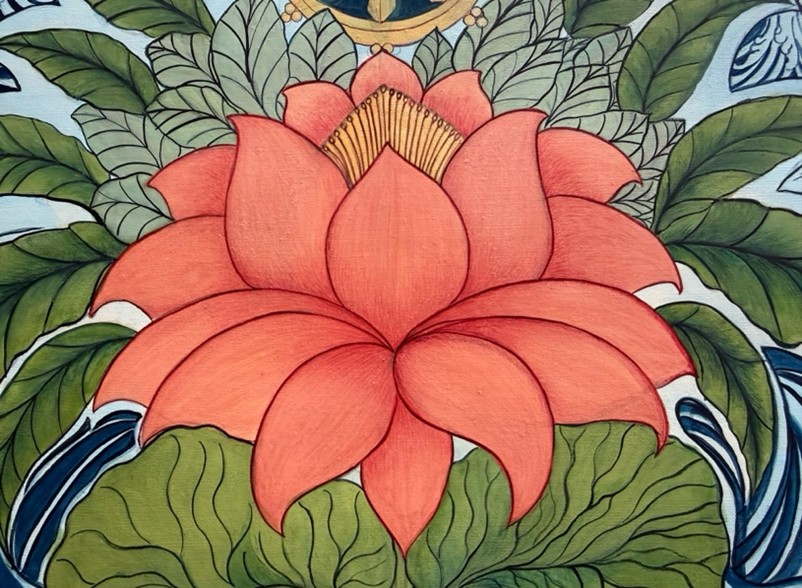
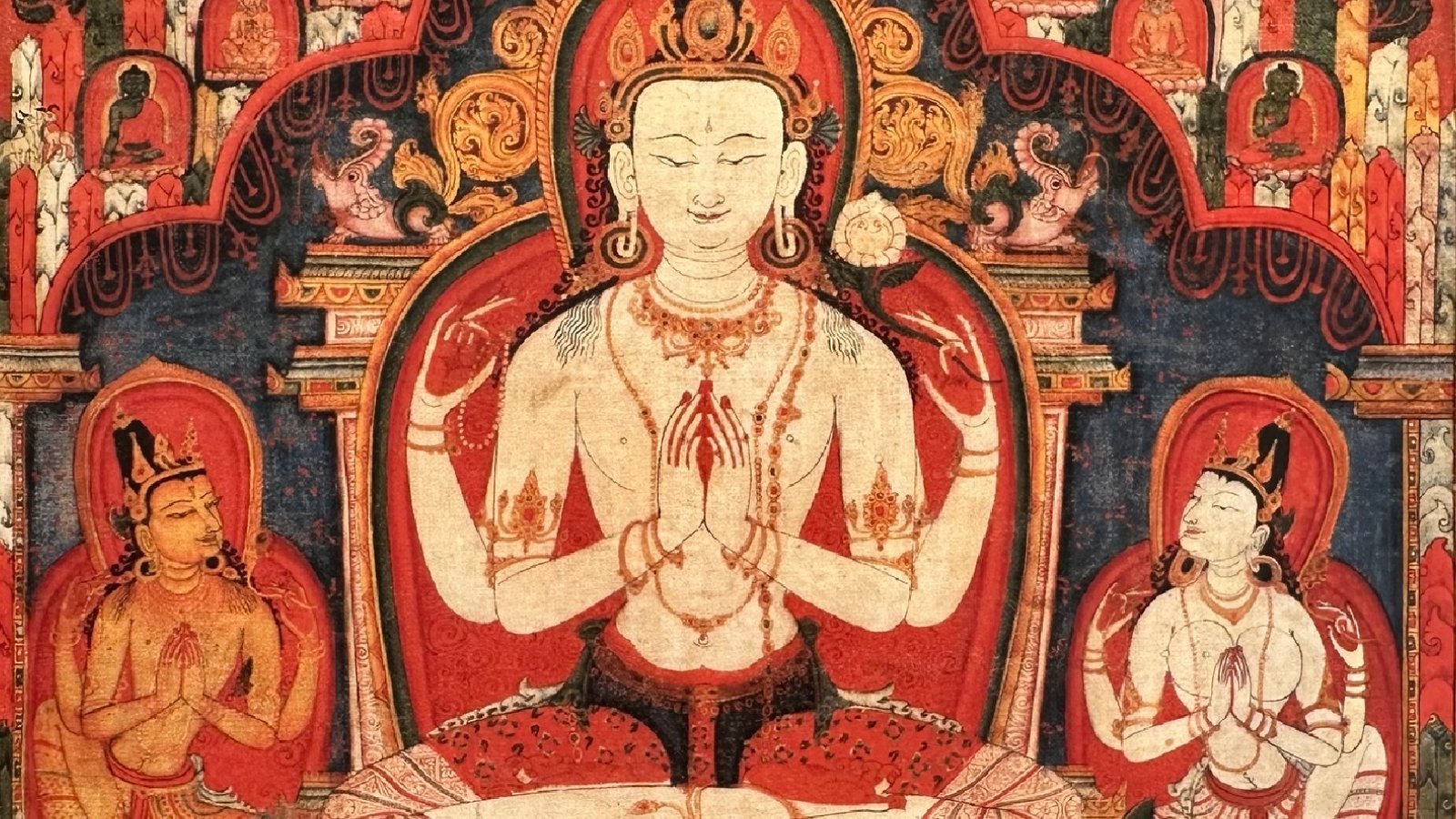
Commonly depicted in a serene four-armed form, Avalokiteshvara appears in radiant white, seated peacefully on a moon disk atop a fully blossomed lotus—embodying purity, empathy, and peaceful presence.
For centuries, Buddhist practitioners have regarded the act of painting Buddhas and bodhisattvas as a path of inner cultivation and realization. In this week‑long immersive course, students will explore Avalokiteshvara not only as an artistic subject but also as a profound symbol of compassion.
Guided step‑by‑step, participants will create their own painting of Avalokiteshvara using the traditional techniques of Paubhā painting, the sacred art form of Nepal. Through contemplative practice and hands‑on instruction, students will gain an integrated understanding of:
- the history and philosophy behind Avalokiteshvara,
- the iconography and symbolism of his various forms,
- and the materials, methods, and aesthetics central to the Paubhā tradition.
Students may choose to trace from provided templates or draw freehand according to their comfort level.
Key Information
Who is this workshop for?
All levels of ability and experience welcome. You must be aged 18 or over to participate in our programmes.
How many people can attend?
14 people
Where will the workshop take place?
At The King’s Foundation School of Traditional Arts, 19-22 Charlotte Road, London EC2A 3SG
What days/times do I attend?
Monday – Friday, 29 June – 3 July 2026, 10:00 – 16:30
What materials do I need?
Students should bring the following to class:
- Pointed, round watercolour brushes:
- Size 00000 x 2 (one for paint, one for gold)
Sizes 000, 00, 1, 3, 6 (please bring a range if you do not have all of these brushes) - Flat brush, wide brush in sizes 2 and 4
- A palette with wells to bring home any pigment that you have mixed
- There will be a small charge for genuine Nepali shell gold, made by your tutor. This is payable on the first day of class.
All other materials will be provided.
Wear comfortable clothing that you do not mind getting slightly messy. Avoid wearing baggy clothing (especially sleeves), loose jewellery, high heels or open-toed shoes.
Tutor Biography
Renuka Gurung, PhD, learned Paubha painting from one of the Chitrakar Masters and Vajracharya priests of Nepal and has established herself as one of the leading masters of traditional Paubha painting. Following the completion of her doctoral studies at the School, Renuka continues her work of preserving Paubha painting by researching and documenting this traditional painting method. She travels internationally exhibiting her works, conducting workshops and lectures with the aim of introducing and promoting Paubha. She recently gave presentations and workshops on Paubha at the University of Oxford and in Hong
FAQs
Do you offer concessions?
Yes, we offer concessions for Seniors/60+, full-time students and people who are unemployed/in receipt of benefits. Concessions cannot be applied in retrospect. To receive a concession, please apply via our online form. We will then send you a discount code to use when booking your space.
Terms & Conditions
The School reserves the right to discontinue or suspend a Course up to fourteen (14) calendar days before the advertised start date of the Course. This course requires a minimum number of enrollments to run.
Our normal terms and conditions apply.