About
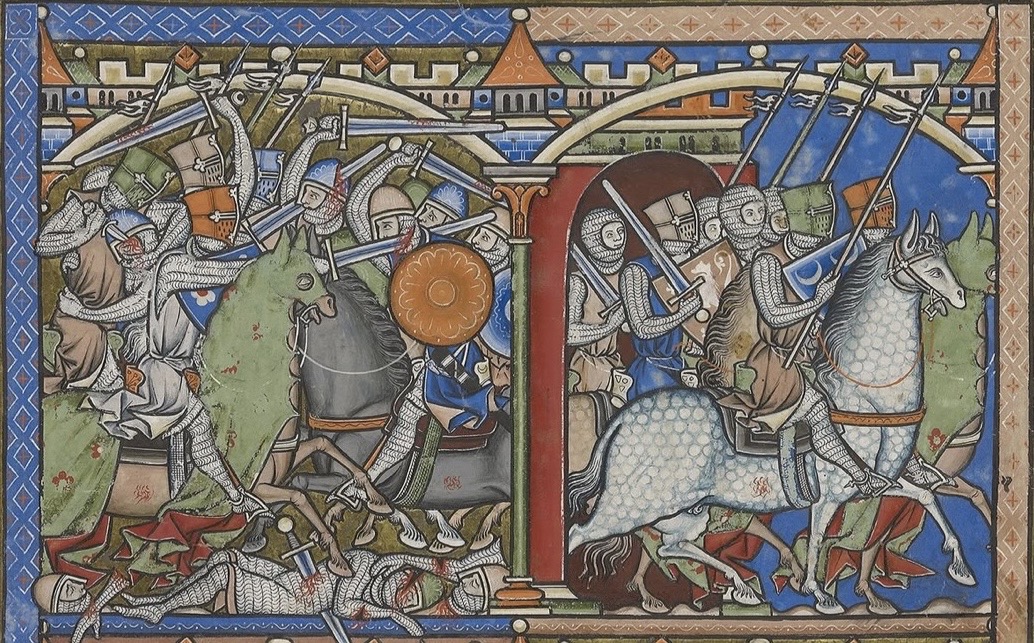
This course explores the creation of a collaborative illuminated “painted tapestry” inspired by the narrative structure and visual language of the Bayeux Tapestry and the ornamental richness of Romanesque medieval manuscripts. We will take our inspiration from the Bayeux Tapestry, which will be on view in the United Kingdom for the first time in almost 1000 years.
While the original tapestry recounts a historical battle, this course reinterprets its rhythmic procession of riders as a symbolic pilgrimage, transforming the narrative into a contemplative journey.
Working on vellum, students will learn traditional techniques associated with manuscript illumination, including careful drawing, vellum preparation, the application and burnishing of gold leaf, and painting with historically informed pigments. Particular attention will be given to the stylised treatment of horses and figures, decorative borders, and symbolic ornament inspired by
Romanesque manuscript traditions such as those seen in the Lindisfarne Gospels and the Book of Kells.
Students will be encouraged to work with historically informed materials, including natural pigments. Where appropriate, the traditional blue pigment derived from woad will be used in the painting process, reflecting the use of this plant-based dye in the Bayeux Tapestry and introducing students to the material heritage of medieval colour.
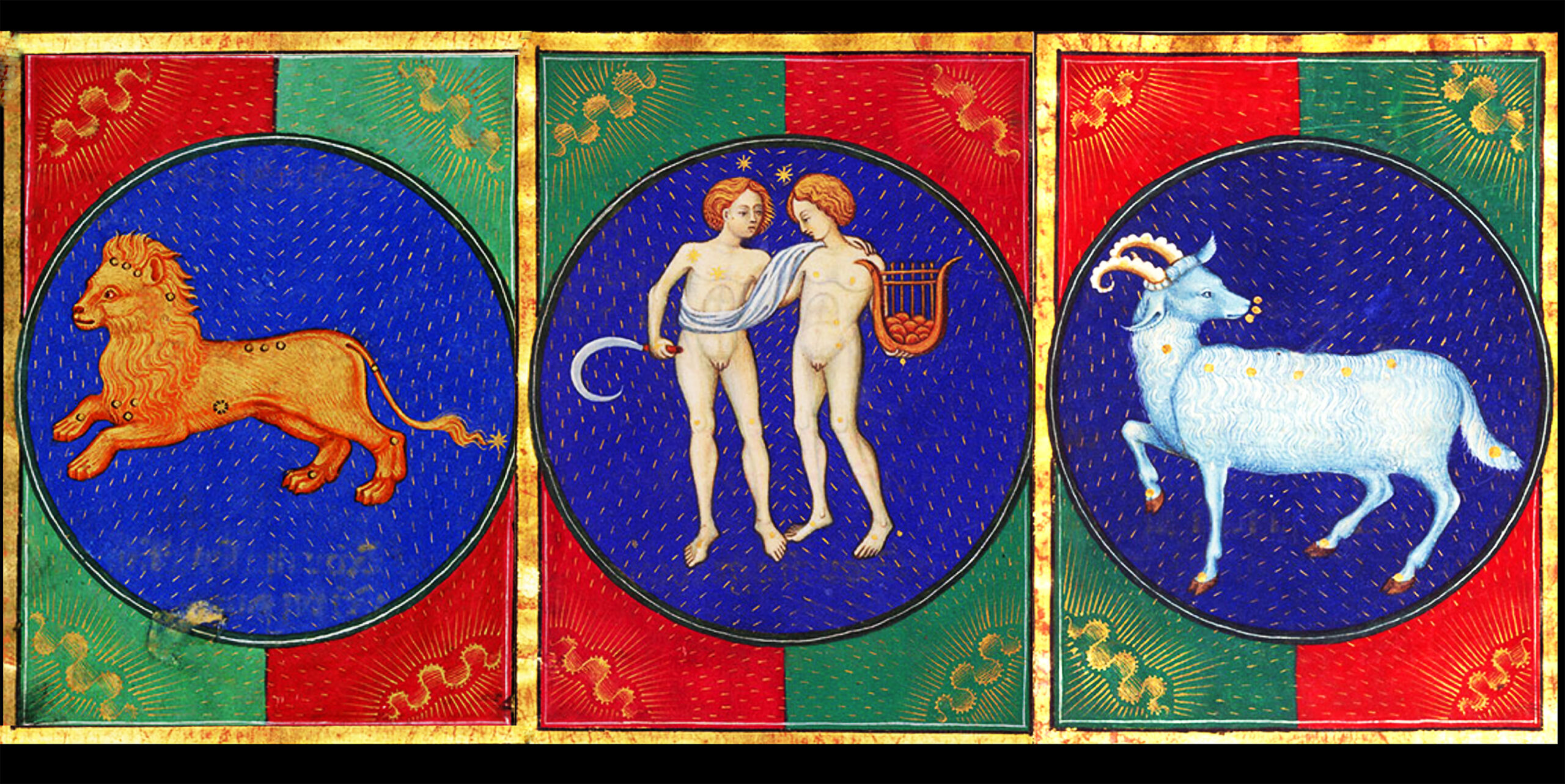
Each student will create an illuminated vellum panel depicting a horse and rider representing an aspect of the cosmic or seasonal cycle, drawing inspiration from medieval calendar imagery often found in manuscript decoration. These riders will form part of a larger allegorical procession, suggesting a pilgrimage that unfolds through the passage of time and the order of the
cosmos.
The final work will bring together all gilded vellum panels to form a single collaborative illuminated tapestry. By reinterpreting the compositional principles of the Bayeux Tapestry through the symbolic language of pilgrimage, the cycle of time, and the decorative traditions of Romanesque manuscripts, the course encourages students to engage deeply with traditional artistic practices while contributing to a shared narrative artwork.
In addition to the week of learning, students will have complimentary admission to the lecture, The Making of the Bayeux Tapestry, on Thursday 26 November 2026. More details about the lecture can be found here. Registered students for this course are required to confirm their attendance.
Key information
Where will this course take place?
This course will take in our studios at The King’s Foundation School of Traditional Arts, 19-22 Charlotte Road, London EC2A 3SG.
Who is the course for?
All levels of ability and experience are welcome. You must be aged 18 or over to participate in our programmes.
How many people can attend?
14 places are available.
What days/times do I attend?
Monday – Friday, 2 – 6 November 2026
What should I bring to class?
- Pointed, rount watercolour brushes in sizes 4/0 and 2. Your tutor suggests the Pro Arte Prolene series 101 (see example)
- One old mixing brush
- 3 palettes (see example)
- 5 sheets of Loose leaf gold, your tutor recommends 23.5ct (be sure it is ‘loose leaf gold’, not transfer gold)
- A small pot for collecting scraps of loose gold, a clean jam jar with a lid works well
- A selection of watercolour/gouach, colours tbc.
FAQs
Do you offer concessions?
Yes, we offer concessions for Seniors/60+, full-time students and people who are unemployed/in receipt of benefits.
Concessions cannot be applied in retrospect. To receive a concession, please apply via our online form. We will then send you a discount code to use when booking your space.
Terms & Conditions
The School reserves the right to discontinue or suspend a Course up to fourteen (14) calendar days before the advertised start date of the Course. This course requires a minimum number of enrollments to run.
The School may take and use images of you and/or your work for course advertisement and social media purposes.
Our normal terms and conditions apply.
Tutor Biography
Lucy Morrish is an iconographer, illuminator, and miniature painter who currently lives in Lincolnshire. She has an affinity for painting icons after studying under Dr Irina Bradley who is a Master Iconographer. Having gained a scholarship from the A.G. Leventis Foundation she studied for a masters degree at the King’s Foundation School of Traditional Arts in London where she graduated with distinction.
From studying at the School she developed an affinity for illuminated manuscripts. Lucy paints with handmade watercolour mineral and earth pigments on calfskin vellum and egg tempera on gessoed wood panels. she also specialises in traditional gilding techniques using 24-carat gold leaf. Lucy has displayed her work in and around the UK, including the opportunity to exhibit at the Saatchi Gallery in 2020.